
Charles Lenox Remond
February 1, 2026
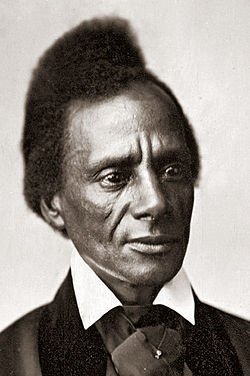 Charles Lenox Remond (February 1, 1810 – December 22, 1873) was an American orator, activist and abolitionist based in Massachusetts. Charles Lenox Remond (1810–1873) was a prominent African American orator, abolitionist, and activist from Massachusetts. As one of the first Black lecturers against slavery, he played a crucial role in the abolitionist movement in the decades leading up to and during the Civil War.
Key aspects of his life and career:
- Family background: Remond was born free in Salem, Massachusetts, to John Remond, a successful caterer and hairdresser from Curaçao, and Nancy Lenox, a member of a respected Boston family. His entire family was involved in activism; his younger sister, Sarah Parker Remond, also became a distinguished abolitionist lecturer.
- Early abolitionist work: In 1838, the Massachusetts Anti-Slavery Society hired him as one of its first African American agents. He toured extensively across the Northeast, lecturing to audiences about the evils of slavery and racial injustice.
- Influence as an orator: Remond was known for his eloquent and passionate speaking style, and his prominence helped pave the way for other Black abolitionist speakers, such as Frederick Douglass, who emerged on the national scene later.
- Commitment to equality: Remond was a staunch opponent of all forms of racial discrimination. In 1842, he became the first African American to address the Massachusetts legislature, where he advocated for the desegregation of railroads and steamboats.
- International travels: In 1840, he traveled to London with William Lloyd Garrison for the World Anti-Slavery Convention. In a notable act of solidarity, he and Garrison refused their seats at the convention to protest the organizers' refusal to seat female delegates. He remained in Britain for 16 months on a lecture tour, raising support for the anti-slavery cause.
- Civil War recruitment: During the American Civil War, Remond was a leading recruiter of Black soldiers for the Union Army. He helped enlist troops for the first all-Black regiments in Massachusetts, including the famous 54th Infantry.
- Advocacy for women's rights: Remond was a lifelong supporter of women's rights and remained an active participant in suffrage meetings and equal rights conventions until late in his life.
- Later life: After the war, Remond worked as a clerk in the Boston Customs House and as a street lamp inspector. He died in 1873 from tuberculosis.