
Phillis Wheatley Peters
December 5, 2025
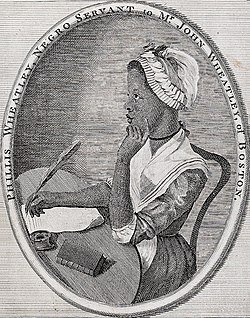 Phillis Wheatley Peters, also spelled Phyllis and Wheatly (c. 1753 – December 5, 1784), was an American writer who is considered the first African-American author of a published book of poetry. Born in West Africa, she was kidnapped and subsequently sold into slavery at the age of seven or eight and transported to North America, where she was bought by the Wheatley family of Boston. After she learned to read and write, they encouraged her poetry when they saw her talent.
Phillis Wheatley (c. 1753–1784) was the first African-American woman to publish a book of poetry and achieve international fame. Born in West Africa and enslaved as a child, she became a prominent poet of the Revolutionary era and a testament to the intellectual abilities of people of African descent.
- Arrival in Boston: At around seven or eight years old, Wheatley was kidnapped from West Africa and transported to Boston on the slave ship Phillis.
- A new name: Upon her arrival in 1761, she was purchased by the wealthy merchant tailor John Wheatley and his wife, Susanna. They named her Phillis after the ship and she was given their last name.
- Remarkable aptitude: The Wheatley family, who held relatively progressive views for the time, recognized her extraordinary intelligence. Their daughter Mary began tutoring Phillis, and within 16 months, she could read and write English. She also studied Latin, Greek classics, the Bible, and other literature.
- First published poem: Wheatley published her first poem, "On Messrs. Hussey and Coffin," in a Newport, Rhode Island, newspaper in 1767.
- Collection of poetry: After a Boston publisher turned her down, her first collection, Poems on Various Subjects, Religious and Moral, was published in London in 1773 with the support of the Countess of Huntingdon. An attestation by 18 prominent Boston men, including John Hancock, was included to prove she was the true author.
- Freedom and recognition: The publication of her book brought Wheatley international acclaim, and she was manumitted (freed from slavery) by the Wheatley family around the same time. During this period, she wrote a poem for George Washington, who later invited her to visit him in 1776.
- Challenges: After the deaths of the elder Wheatleys, she was left to support herself through her writing and as a domestic worker. She married John Peters, a free Black man, in 1778, and they lived in poverty. A second volume of poetry failed to be published due to a lack of patrons and the upheaval of the Revolutionary War.
- Death: Wheatley died in poverty and obscurity in 1784 at the age of 31, followed soon after by her infant child.
- Complex legacy: While some have dismissed her work for what they see as limited engagement with her status as an enslaved person, scholars now recognize the subtly asserted equality and layered critiques present in her writing. The fact that she was able to achieve what she did at a time when most people of African descent were denied a voice cemented her place as a foundational figure in African-American literature.